


Subtotal $0.00

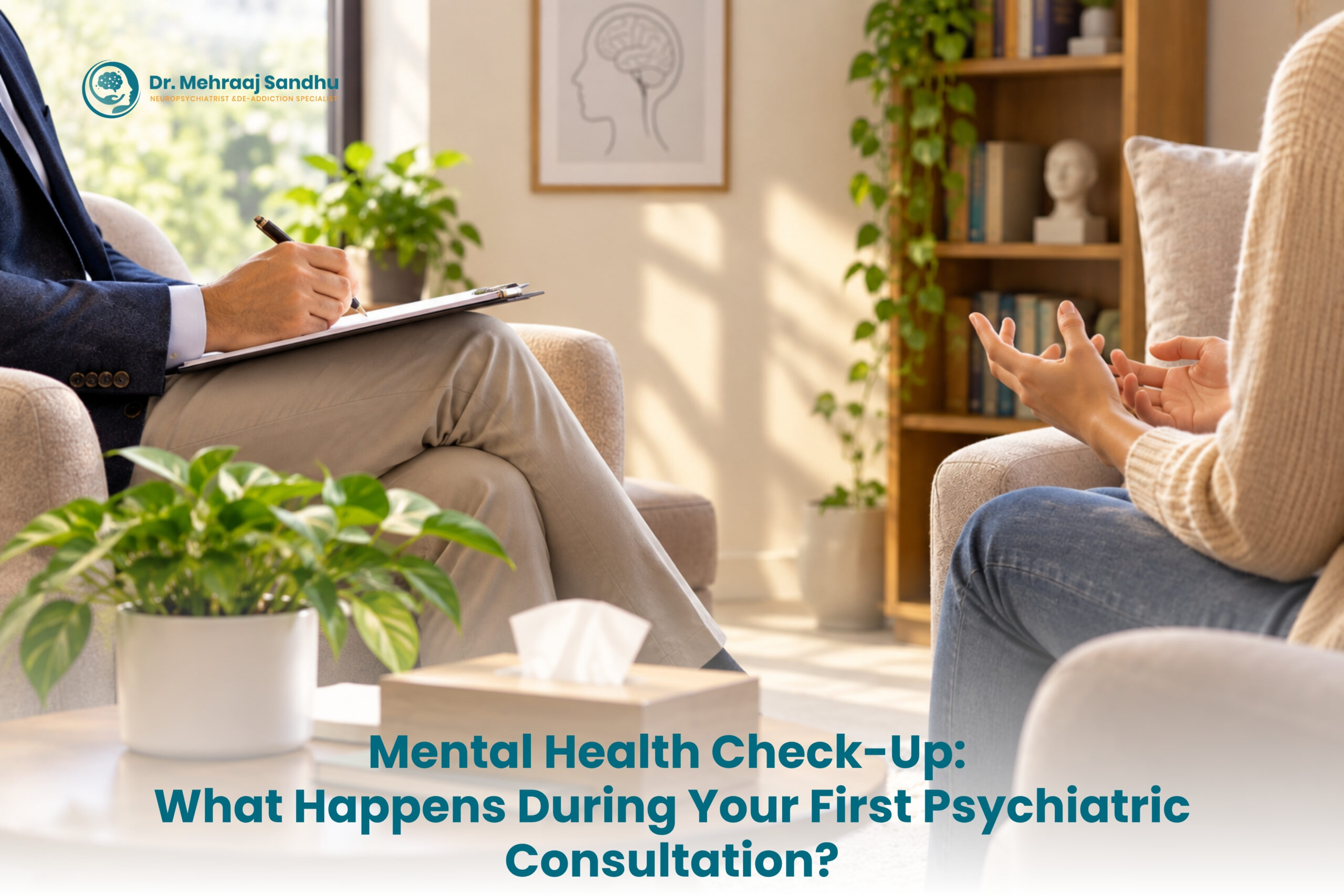
The decision to speak to a psychiatrist can seem like a big step. Before your appointment you may have many questions: Will the psychiatrist throw me out? What will they be asking? Do I need drugs? “Do I have to go into my past? What if I don’t know how I feel?
These concerns are completely understandable.
A First Psychiatric Consultation is usually a conversation designed to understand your mental health, emotional well-being, symptoms, medical background, and current challenges. It isn’t a test that you need to pass, and you don’t need to prepare perfect answers.
The purpose is to understand what you’re experiencing and determine what kind of support may be appropriate.
During your appointment, a psychiatrist may ask you about your symptoms, sleep, mood, thoughts, behavior, relationships, physical health, medications, personal history and other things that may be affecting your well-being. Depending on the circumstances, they may also discuss possible diagnoses and possible treatment options.
Dr. Mehraaj Sandhu emphasizes that understanding each patient’s concerns and developing a customized approach to mental health treatment is important for patients seeking professional psychiatric care.
This guide explains what you can expect before, during, and after your first psychiatric appointment so you can walk into the consultation feeling more informed and comfortable.
Why Your First Psychiatric Consultation Matters
The first appointment provides an opportunity for you and your psychiatrist to understand what’s happening and decide on the next steps.
Understanding the Purpose of the Visit
A psychiatric consultation isn’t simply about receiving medication.
A psychiatrist may want to understand:
- What symptoms you’re experiencing
- When those symptoms began
- How often they occur
- Whether they’re becoming more severe
- How they affect work, studies, relationships, or daily life
- How you’re sleeping
- Changes in appetite or energy
- Your medical history
- Your previous mental health treatment
- Current medications
- Family mental health history
- Major recent life events or stressors
This bigger picture can help the psychiatrist understand if your symptoms are related to a mental health condition, a physical health problem, medication, substance use, stress or a combination of factors.
You Don’t Need to Have All the Answers
Many people worry that they won’t know what to say.
That’s okay.
You don’t need to self-diagnose before the appointment. You don’t need to remember all the details of your life. No medical terminology is necessary.
Often, just mentioning what you have seen is enough to start the dialog.
For example, you might say:
““I have been anxious most days for the last few months and it is affecting my sleep and my ability to concentrate.”
That is already useful information.
Your psychiatrist can ask follow-up questions to get a better sense of the situation.
What to Expect Before Your Appointment
A little preparation can make your appointment easier, but don’t feel that you need to create a perfect report about yourself.
Making a Note of Your Symptoms
Before your appointment, consider writing down the main things that have been bothering you.
You could note:
- Mood changes
- Anxiety or excessive worry
- Panic episodes
- Sleep problems
- Changes in appetite
- Low motivation
- Difficulty concentrating
- Irritability
- Changes in energy
- Repeated unwanted thoughts
- Changes in social behavior
- Problems at work or school
If possible, note approximately when the symptoms started and whether they have improved or worsened.
Gathering Your Medical Information
Your mental health may be connected to your physical health.
Write down any medications and supplements you are currently taking before your appointment. You may also want to bring in any past medical reports relevant to the problems you are having now.
Discuss with your psychiatrist other important medical problems, previous treatment for mental health problems, allergies and any medicines you have taken for mental health problems .
Being open about alcohol or recreational drug use is also important as these can impact on mood, sleep, anxiety, behavior and medication safety.H2: What Happens During a Psychiatric Consultation
Many first appointments begin with a conversation rather than a formal test.
Starting With a Conversation
Your psychiatrist may first ask why you’ve decided to seek help.
You might be asked:
- “What brings you here today?”
- “How have you been feeling recently?”
- “When did you first notice a change?”
- “How is this affecting your everyday life?”
The conversation may gradually become more detailed based on your answers.
The psychiatrist isn’t trying to catch you out. These questions help build a clearer picture of your current mental health.
Discussing Your Mental and Physical Health
Mental and physical health are closely connected.
Sleep problems can affect mood and concentration, for example. Certain health conditions can influence your energy or mental health. Some medications can also affect sleep, appetite or mood.
So your psychiatrist may ask about your mental and physical health.
A thorough understanding of your health can help guide the right treatment.

Psychiatric Evaluation: What Does It Include?
A Psychiatric Evaluation generally involves gathering information about your symptoms, history, functioning and mental state.
Understanding Your Thoughts and Emotions
Your psychiatrist may ask about your mood and emotional experiences.
Depending on your symptoms, questions may cover:
- Sadness
- Anxiety
- Fear
- Irritability
- Anger
- Motivation
- Enjoyment
- Self-esteem
- Racing thoughts
- Repetitive thoughts
- Concentration
- Unusual perceptions or beliefs
Some questions may feel personal. That’s normal.
Your psychiatrist asks them because certain thoughts, emotions and experiences can help distinguish between different mental health concerns.
Looking at Sleep, Appetite, Energy and Daily Functioning
Mental health conditions can affect everyday physical and behavioral patterns.
Your psychiatrist may ask about:
- Sleep duration and quality
- Appetite
- Weight changes
- Energy levels
- Work or academic performance
- Social activities
- Personal relationships
- Ability to complete everyday tasks
These details can help your psychiatrist understand the severity and impact of your symptoms.
Questions Your Psychiatrist May Ask
You may be surprised by how broad the discussion can be.
Questions About Your Current Symptoms
Sleep problems can affect mood and concentration, for example. Certain health conditions can influence your energy or mental health. Some medications can also affect sleep, appetite or mood.
So your psychiatrist may ask about your mental and physical health.
A thorough understanding of your health can help guide the right treatment.
Questions About Your Personal and Family History
Your mental health history may be important.
The psychiatrist may ask about previous diagnoses, counseling, psychiatric treatment, hospitalizations or medications.
Family history may also be discussed because some mental health conditions can have genetic or familial components.
You may also be asked about childhood experiences, relationships, education, employment, major life changes or significant stress.
You can tell your psychiatrist if you’re uncomfortable discussing something immediately. Sensitive information can often be explored gradually.
Will You Receive a Diagnosis During Your First Visit?
Sometimes a diagnosis can be made during the initial appointment. In other cases, more information or follow-up appointments may be needed.
Why Diagnosis May Take Time
Mental health symptoms can overlap.
For example, difficulty sleeping can occur with anxiety, depression, stress, certain physical health conditions, medication effects and other situations.
Similarly, low energy can have many possible causes.
A responsible psychiatrist doesn’t need to rush to a conclusion. They may need time to understand the pattern, duration, severity and context of your symptoms.
When Further Assessment May Be Needed
Additional assessment may be recommended when symptoms are complex, have multiple possible causes or require more detailed observation.
Follow-up appointments can also help determine whether symptoms change over time and how you respond to treatment.
The goal isn’t to attach a label as quickly as possible. The goal is to understand your condition accurately enough to provide appropriate care.

Discussing Treatment Options
After understanding your concerns, your psychiatrist may discuss possible treatment options.
Medication and When It May Be Recommended
Medication may be appropriate for some mental health conditions, but it isn’t automatically prescribed to everyone.
If medication is considered, your psychiatrist may explain:
- Why it may be useful
- How it is generally taken
- Possible side effects
- Expected benefits
- How progress will be monitored
- What to do if you experience problems
Never start, stop, or change psychiatric medication without professional guidance.
Treatment decisions should consider your symptoms, medical history, preferences, other medications and overall health.
Therapy and Other Treatment Approaches
Medication is only one part of mental health care.
Depending on your situation, your treatment plan may include psychotherapy, behavioral strategies, lifestyle changes, stress management, sleep improvement or referral to another mental health professional.
Some people benefit from a combination of approaches.
Your treatment plan should be based on your individual needs rather than a one-size-fits-all formula.
What to Expect at Your First Psychiatric Appointment After the Consultation
The end of your appointment isn’t necessarily the end of the process. In many cases, it marks the beginning of an ongoing care plan.
Creating a Personalized Treatment Plan
Your psychiatrist may discuss recommended next steps.
This could involve starting treatment, monitoring symptoms, arranging therapy, completing additional assessments or scheduling a follow-up.
Ask questions if something isn’t clear.
You have the right to understand why a particular treatment has been suggested and what you can expect from it.
Follow-Up and Monitoring
Follow-up appointments allow your psychiatrist to assess progress and make adjustments when necessary.
For example, if medication is prescribed, your response and potential side effects may need to be monitored.
If therapy or lifestyle changes are recommended, follow-up can help determine what’s working and what needs to change.
Mental health treatment is often a process rather than a single event.
How to Prepare for a First Psychiatrist Visit
Good preparation can help you get more from your appointment.
What to Bring With You
Consider bringing:
- A list of current medications
- Relevant medical reports
- Previous psychiatric prescriptions or records
- Notes about your main symptoms
- Important medical history
- Questions you want to ask
If a trusted family member or friend has noticed significant changes in your behavior, their observations may sometimes be helpful, depending on your situation and your comfort level.
Questions You Can Ask
Don’t be afraid to ask questions.
You could ask:
- What could be causing my symptoms?
- Do I need any additional assessment?
- What treatment options are available?
- Would therapy be helpful?
- Is medication appropriate for me?
- What side effects should I watch for?
- How soon should I expect to notice changes?
- When should I return for follow-up?
There are no “silly” questions when it comes to your health.
Common Concerns About Psychiatric Appointments
It’s common to feel nervous before meeting a psychiatrist for the first time.
Will I Be Judged?
Many patients worry about being judged.
A psychiatric consultation is intended to understand your health, not criticize your experiences.
Try to be as honest as you can. Your psychiatrist needs accurate information to understand what you’re going through.
You don’t have to feel ashamed about having anxiety, depression, mood changes, intrusive thoughts or other mental health symptoms.
Mental health conditions are health conditions. Seeking help is a responsible decision.
Is Everything I Say Important?
If something is affecting your thoughts, emotions, behavior, sleep, relationships or daily functioning, it’s worth mentioning.
Even details that seem unrelated may provide useful context.
If you’re unsure whether something matters, tell your psychiatrist and let them decide whether it’s relevant.

When Should You Consider a Mental Health Check-Up?
You don’t have to wait for a crisis before seeking professional support.
Symptoms That Deserve Attention
A Mental Health Check-Up may be worth considering if you notice persistent or worsening changes such as:
- Ongoing sadness
- Excessive worry
- Frequent panic
- Major sleep changes
- Loss of interest in activities
- Difficulty functioning at work or school
- Significant mood swings
- Social withdrawal
- Problems concentrating
- Emotional distress that feels difficult to manage
The earlier you discuss persistent symptoms, the sooner you can understand what may be happening and what support could help.
When Urgent Help Is Necessary
Some situations require immediate attention.
If you have thoughts of suicide or self-harm, feel unable to keep yourself safe or believe you may seriously harm someone else, seek urgent medical or emergency support rather than waiting for a routine appointment.
Tell someone you trust and contact local emergency services or go to the nearest emergency department when immediate safety is a concern.
Getting Psychiatric Care in Chandigarh
Choosing a qualified psychiatrist is an important decision.
People searching for psychiatric care in Chandigarh should look beyond a title or online ranking. Consider professional qualifications, experience, communication style, areas of expertise and whether the psychiatrist takes time to understand your individual concerns.
Choosing an Experienced Mental Health Professional
A good psychiatric consultation should leave you with a clearer understanding of your concerns and possible next steps.
Dr. Mehraaj Sandhu provides psychiatric care with an individualized approach, helping patients discuss their concerns openly and explore appropriate treatment options.
Whether you’re attending your first appointment because of anxiety, depression, sleep problems, mood changes or another concern, you don’t need to have everything figured out beforehand.
Your first appointment is a starting point.
Frequently Asked Questions
Q1: What should I expect during my first psychiatric consultation?
You can generally expect a detailed conversation about your current symptoms, mental and physical health, personal history, medications, sleep, daily functioning and other relevant factors. Your psychiatrist may then discuss possible diagnoses and treatment options.
Q2: How long does a psychiatric consultation take?
The duration can vary depending on the complexity of your concerns and the information that needs to be discussed. An initial appointment may take longer than a routine follow-up because the psychiatrist is gathering a detailed history.
Q3: Should I prepare anything before seeing a psychiatrist?
You don’t need extensive preparation. It can help to make notes about your symptoms, when they started, current medications, previous treatment, relevant medical conditions and questions you want to ask.
Q4: Will I be prescribed medication during my first visit?
Not necessarily. Medication decisions depend on your symptoms, diagnosis or clinical assessment, medical history, treatment preferences and other factors. Some patients may be advised to begin medication, while others may benefit from therapy, monitoring or additional assessment.
Q5: Can I bring a family member to my appointment?
Depending on the clinic and your circumstances, you may be able to bring a trusted family member or friend. Whether their participation is useful depends on your preferences and the nature of the consultation. Your psychiatrist can guide you on this.
Q6: What if I don’t know how to explain what I’m feeling?
That’s completely okay. You can start by describing the changes you’ve noticed in everyday language. Your psychiatrist will ask questions to help you explain your experience. You don’t need to know the medical name for what you’re experiencing.
Q7: Is seeing a psychiatrist a sign that my mental health problem is serious?
Not necessarily. People seek psychiatric care for many different reasons, ranging from persistent stress and anxiety to more complex mental health conditions. A consultation is simply an opportunity to understand your concerns and determine what type of support may be appropriate.
Conclusion
Your First Psychiatric Consultation doesn’t have to be scary. Consider it a chance to have an open discussion about any possible changes in your thoughts, feelings, behavior, sleep, relationships or everyday functioning.
Your psychiatrist’s job is to listen to you and ask relevant questions to understand your history and help figure out what the best next step is. You may receive a diagnosis at your first appointment or you may be referred for further assessment and follow up before a diagnosis is made.
Treatment can involve medication, psychotherapy, lifestyle changes, monitoring or a combination of approaches. The right plan depends on your individual situation.
If you’ve been struggling for a while, don’t feel that you need to “wait until things get worse” before asking for help. Reaching out early can be an important step toward understanding your mental health and finding appropriate support.
For patients in Chandigarh, Dr. Mehraaj Sandhu provides professional psychiatric care focused on individualized assessment and treatment.
Taking care of your mental health is part of taking care of your overall health—and asking for help is a sign that you’re taking that responsibility seriously.
Medical Disclaimer:
This article is intended for general educational purposes and does not replace a professional psychiatric assessment, diagnosis or treatment. If you are experiencing an immediate mental health emergency or are at risk of harming yourself or someone else, seek urgent medical or emergency assistance.
