


Subtotal $0.00

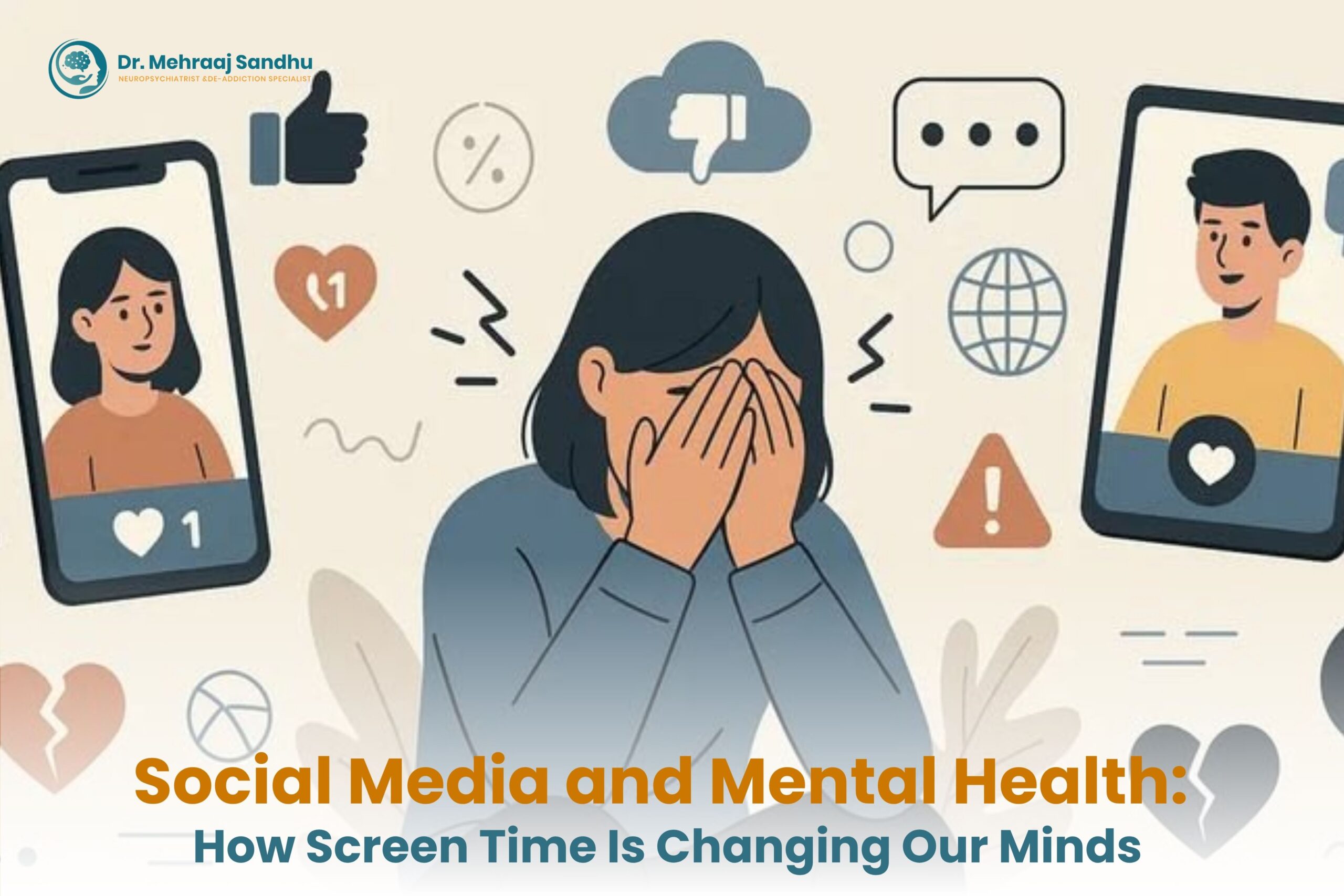
Social media and mental health are now very closely linked topics in the digital world we live in. People can connect right away, share their experiences and stay up to date on platforms like Instagram, Facebook, you tube and X. But being on screens and talking to people online all the time can also affect your emotional health.
Psychiatrists and mental health professionals are increasingly seeing the psychological impact of heavy online engagement. According to many clinical observations—including insights shared by Dr. Mehraaj Sandhu, psychiatrist— excessive digital exposure can influence mood, concentration, sleep patterns and overall mental stability.
Researchers are still looking into how social media affects mental health, especially in teens and young adults. Social media can help people connect and have fun, but it can also make people feel anxious, compare themselves to others and develop bad digital habits when they use it too much.
This article explores how social media and mental health interact, the role of screen time in emotional wellbeing and practical strategies to maintain a healthier digital balance.
Understanding Social Media and Mental Health
Why the Relationship Between Social Media and Mental Health Matters
The conversation around social media and mental health has intensified over the last decade. Smartphones have placed social platforms in our pockets 24/7, making it easier than ever to stay connected.
However, constant connectivity means people rarely get a break from online interactions. Notifications, likes, comments and endless scrolling can overstimulate the brain and create emotional pressure.
Psychiatrists often note that numerous individuals cultivate emotional dependence on online affirmation. When posts don’t get as many likes or comments as expected, it can hurt your self-esteem and confidence.
At the same time, social media can also provide positive support networks. Communities centered around mental health awareness, recovery and peer support have helped many individuals feel less alone.
The key issue is balance. When social media becomes the primary source of social interaction or emotional validation, psychological challenges may begin to appear.
Mental health professionals emphasize that mindful use of technology is essential for maintaining emotional resilience.
The Impact of Social Media and Mental Health on Daily Life
How Online Interaction Influences Emotional Wellbeing
One major concern researchers discuss is the impact of social media on mental health. Online environments can shape how people view themselves and their lives.
Social platforms often show highly curated lifestyles. People share highlights rather than everyday struggles. When individuals compare their real life with these filtered portrayals, feelings of inadequacy may arise.
Common emotional responses include:
- Low self-esteem
- Fear of missing out (FOMO)
- Increased stress
- Social comparison
- Emotional fatigue
Constantly comparing yourself to others can lower your self-esteem over time. Teenagers and young adults are especially at risk because they are still figuring out who they are and how they see themselves.
Psychiatrists like Dr. Mehraaj Sandhu often tell people that what they see on social media related to social media and mental health isn’t always true. Knowing this helps ease the emotional stress that comes from having unrealistic expectations.
Effects of Screen Exposure on Psychological Health
Effects of Screen Time on Mental Health
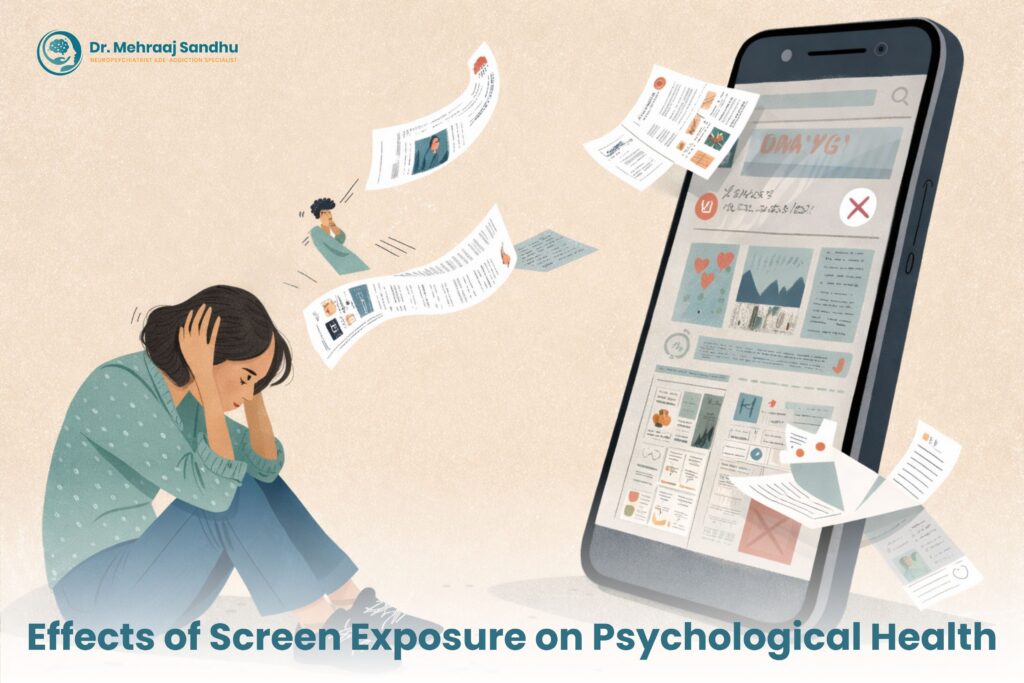
Another important factor in the discussion of social media and mental health is screen exposure.
Studies examining the effects of screen time on mental health show that prolonged digital engagement can influence emotional regulation and concentration.
Spending many hours looking at screens may lead to:
- Reduced attention span
- Increased irritability
- Mental fatigue
- Lower productivity
- Reduced face-to-face interaction
When screens take over daily life, things like exercise, hobbies and spending time with friends and family may happen less often. This lack of balance can make you less emotionally strong and more stressed.
Experts often say that taking planned breaks from screens and being mindful of how you use digital devices are good for your mental health.
Social Media and Mental Health: Anxiety and Depression Risks
Social Media Anxiety and Depression
One of the most frequently discussed topics related to social media and mental health is the rise of social media and mental health anxiety and depression.
Many users feel pressure to remain active online, respond quickly to messages and maintain a positive digital image. This constant expectation can create mental strain.
Some warning signs include:
- Feeling anxious without checking the phone
- Mood changes after browsing social platforms
- Overthinking online interactions
- Feeling excluded when seeing others’ posts
Psychiatrists often explain that these patterns can create a cycle where individuals seek validation online but feel worse afterward.
Professional guidance may help individuals develop healthier emotional boundaries with technology.
Digital Addiction and Mental Health
When Social Media Use Becomes Compulsive
In some cases, excessive online engagement evolves into digital addiction social media and mental health concerns.
Digital addiction occurs when individuals feel unable to control their time online despite negative consequences.
Typical symptoms include:
- Compulsive checking of notifications
- Losing track of time while scrolling
- Ignoring responsibilities or relationships
- Feeling restless without internet access
Mental health experts say that social media sites use algorithms, notifications and reward systems to keep people interested.
The first step to making your digital boundaries healthier is to notice when you use them in an unhealthy way.
Screen Time and Sleep Problems
How Nighttime Device Use Affects the Brain
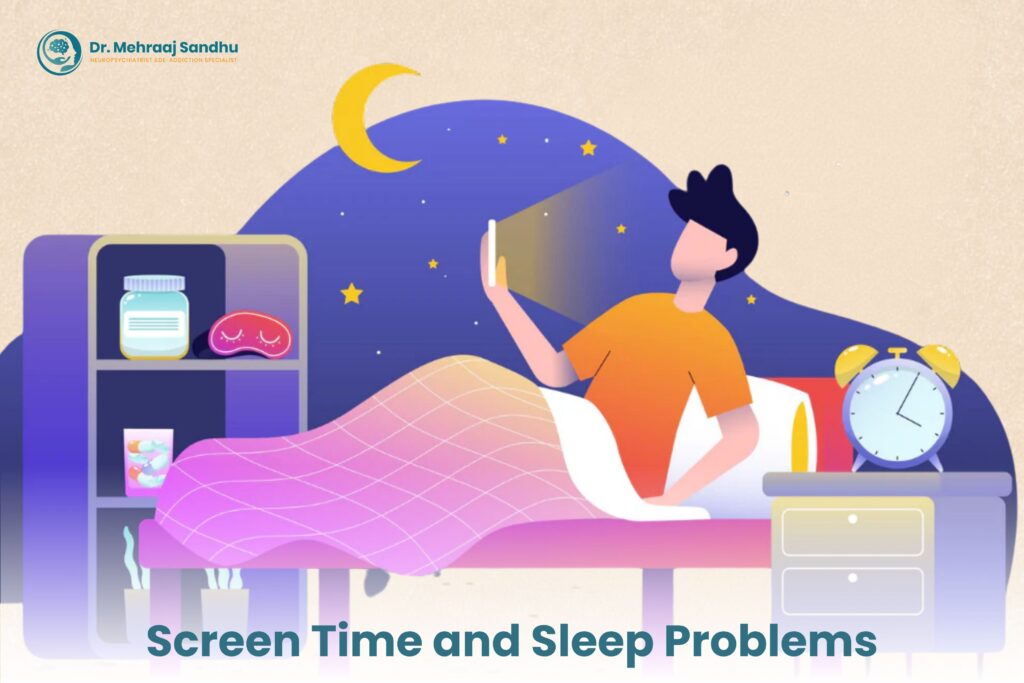
Another critical link between social media and mental health involves sleep quality.
A lot of people have trouble sleeping and spending too much time on their phones at night. Screens that emit blue light can stop the body from making melatonin, the hormone that makes you sleepy.
When sleep patterns are messed up, a number of social media and mental health problems can show up:
- Increased stress
- Poor concentration
- Mood swings
- Emotional instability
Psychiatrists often recommend avoiding screens at least 30–60 minutes before bedtime to allow the brain to relax and prepare for sleep.
Better sleep habits significantly support emotional wellbeing.
Mental Health Effects of Excessive Screen Time
Long-Term Psychological Consequences
The mental health effects of excessive screen time are becoming an important focus in psychological research.
When screen usage replaces real-world engagement, individuals may experience reduced social skills, loneliness and emotional fatigue.
Long-term patterns of excessive digital engagement may contribute to:
- Increased isolation
- Reduced physical activity
- Difficulty managing emotions
Lower productivityProfessionals such as Dr. Mehraaj Sandhu, psychiatrist, emphasize the importance of balanced technology use, particularly for children and adolescents.
Developing healthy digital habits early can help protect emotional wellbeing in adulthood.
Practical Strategies for Healthier Digital Habits
How to Reduce Social Media Usage
Learning how to reduce social media usage does not mean eliminating technology completely. Instead, it involves creating mindful digital habits.
Here are effective strategies recommended by mental health professionals:
1. Set Daily Screen Limits
Use built-in phone tools to track and limit daily social media time.
2. Schedule Phone-Free Periods
Designate certain hours—such as meals or evenings—as device-free.
3. Turn Off Non-Essential Notifications
Reducing notifications lowers the urge to check phones constantly.
4. Replace Scrolling With Healthy Activities
Exercise, reading, or outdoor walks help reset the brain.
5. Practice Digital Detox Days
Taking occasional breaks from social media helps restore mental clarity.
These simple changes can significantly improve emotional wellbeing.
Social Media and Mental Health: Building a Balanced Relationship
Developing Healthy Online Behavior
Healthy technology habits involve intentional and mindful engagement.
Experts recommend:
- Using social media for connection rather than validation
- Following positive and supportive accounts
- Avoiding online comparisons
- Prioritizing real-world relationships
Psychiatrists like Dr. Mehraaj Sandhu and other mental health professionals often tell people to think about how their digital behaviour affects their feelings.
When social media helps people learn, be creative and have meaningful conversations, it can be a good part of everyday life.
Frequently Asked Questions (FAQs)
1. How are social media and mental health connected?
Social media influences how people communicate, compare themselves with others, and seek validation. Excessive use may contribute to stress, anxiety and emotional fatigue.
2. Can too much screen time affect emotional wellbeing?
Yes. Long hours of digital exposure can influence mood, attention span and sleep patterns, which are closely linked to psychological health.
3. Who is most vulnerable to social media stress?
Teenagers and young adults are more vulnerable because they are still developing their identity and emotional resilience.
4. How can someone maintain healthy digital habits?
Setting time limits, turning off notifications, and scheduling phone-free periods can help maintain balance.
5. When should someone seek professional help?
If social media usage leads to anxiety, mood changes, sleep issues or difficulty managing daily responsibilities, consulting a mental health professional may help.
6. Can social media ever be positive for mental health?
Yes. Support groups, educational content and positive communities can help people feel connected and informed when used responsibly.
Conclusion
It’s not easy to understand how social media affects mental health. Social media sites can be used to talk to people, have fun and learn new things. But spending too much time online can also hurt your mental health.
Knowing how being on screens affects your mind can help you make better choices about how you use technology.
Dr. Mehraaj Sandhu, a psychiatrist and other mental health professionals suggest being aware of how technology affects your emotions, using technology mindfully, and living a balanced life.
People can enjoy the benefits of technology while protecting their mental health by making their digital habits healthier.
