


Subtotal $0.00

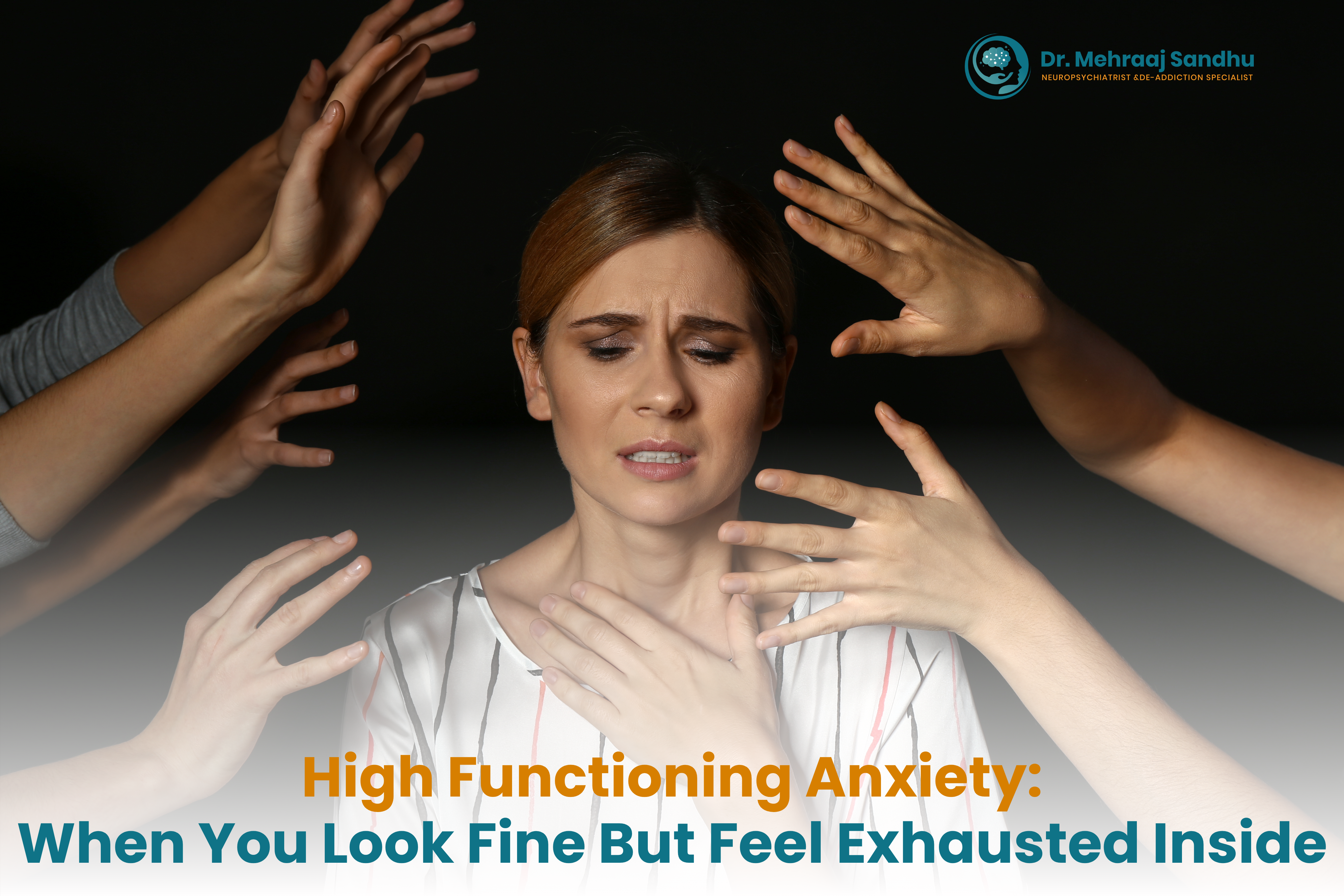
Many people appear successful, organised and confident on the outside, while silently struggling with overwhelming worry inside. This is commonly referred to as high functioning anxiety. High-functioning anxiety is not as obvious as anxiety that interrupts your day-to-day life. It can be covered up by accomplishments, productivity and perfectionism.
Individuals dealing with this condition may excel in their careers, maintain relationships and meet responsibilities while constantly battling internal stress. Because they continue functioning at a high level, friends, family members and colleagues often fail to recognize their struggle.
At Dr Mehraaj Sandhu‘s mental health practice, many patients share a similar experience: they seem fine to everyone around them but feel mentally and emotionally drained. Understanding this pattern is the first step toward better emotional health and long-term well-being.
Understanding High Functioning Anxiety
What Is High Functioning Anxiety?
High functioning anxiety is not officially recognised as a separate clinical diagnosis. But mental health professionals often use the term to refer to people who are very anxious but who are outwardly successful and productive.
Unlike severe anxiety disorders that may interfere with daily functioning, people with high functioning anxiety often channel their anxiety into achievement. They become highly responsible, detail-oriented and dependable.
The challenge is that their success can mask underlying emotional distress, making it difficult for others—and sometimes even themselves—to recognize the problem.
Why It Often Goes Unnoticed
One reason signs of high-functioning anxiety often go unnoticed is because society often rewards behaviours associated with anxiety-driven performance. Long hours, perfectionism and always being busy are often seen as positive traits.
That leads a lot of people to keep pushing themselves past healthy limits, without dealing with the emotional toll.
Common Signs of High Functioning Anxiety
Constant Overthinking
People experiencing high-functioning anxiety symptoms often find it difficult to switch off their thoughts. Everyday situations may trigger excessive analysis and worry.
Typical Examples
- Replaying conversations repeatedly
- Worrying about future mistakes
- Anticipating worst-case scenarios
- Difficulty making decisions
This constant mental activity can become exhausting over time.
Persistent Need for Perfection
The relationship between perfectionism and anxiety is well established in mental health research. Individuals may set unrealistically high standards for themselves and feel intense distress when those standards are not met.
Common behaviors include:
- Spending excessive time on tasks
- Fear of criticism
- Difficulty delegating responsibilities
- Avoiding situations where failure is possible
Excessive Self-Criticism
Many people with high functioning anxiety have self-doubt in their internal dialogue.
Even when they’ve hit major milestones, they may even think about what they didn’t do, rather than celebrate accomplishments.
Difficulty Relaxing
Rest can feel uncomfortable. Some individuals feel guilty when they are not being productive and may constantly search for tasks to complete.
This inability to unwind contributes significantly to long-term stress.
Hidden Anxiety Behind Professional Success
Anxiety in the Workplace
Many cases of anxiety in working professionals remain undetected because performance levels remain high.
Employees may be meeting or exceeding expectations, but privately they may be feeling:
- Always anxious
- Scared to fail
- Not unplugging from work
- Disruption of sleep
Because productivity remains strong, employers and coworkers may never recognize the emotional burden.
Why Achievement Can Become a Coping Mechanism
Success often becomes a way to temporarily manage anxiety.
Accomplishments provide short-lived relief, leading individuals to seek even more achievements to maintain a sense of control and security.
Over time, this cycle can become emotionally draining.
Emotional Exhaustion Beneath the Surface
The Hidden Cost of Always Performing
One of the most overlooked aspects of high functioning anxiety is anxiety and emotional exhaustion.
Maintaining a calm, competent image while managing persistent internal stress requires tremendous mental energy.
People may feel:
- Drained after social interactions
- Constantly fatigued
- Emotionally numb
- Detached from activities they once enjoyed
Emotional Exhaustion Despite Success
Many individuals experience emotional exhaustion despite success. Despite promotions, financial stability or personal accomplishments, they continue feeling dissatisfied and overwhelmed.
This happens because external success does not eliminate internal anxiety.
Without proper support, emotional fatigue often intensifies over time.
Hidden Symptoms Many People Miss
Physical Manifestations
Some of the most common hidden anxiety symptoms are physical rather than emotional.
They may include:
- Muscle tension
- Headaches
- Digestive discomfort
- Jaw clenching
- Fatigue
These symptoms are often mistaken for unrelated health concerns.
Anxiety Without Panic Attacks
Contrary to popular belief, anxiety does not always involve panic attacks.
Many individuals experience anxiety without panic attacks, leading them to believe their symptoms are not serious enough to warrant attention.
However, chronic worry and stress can still significantly affect quality of life.

Why People Hide Their Anxiety So Well
Fear of Being Judged
A major reason why people hide their anxiety well is fear of appearing weak or incapable.
Many high achievers worry that admitting emotional struggles may damage their reputation or professional image.
Social Expectations
Modern culture often celebrates busyness and constant productivity.
As a result, many people normalize stress and dismiss warning signs until symptoms become severe.
The Pressure to Maintain Control
Individuals with high functioning anxiety frequently feel responsible for managing every detail of their lives.
Seeking help can feel uncomfortable because it requires acknowledging vulnerability.
The Connection Between Burnout and Anxiety
Understanding the Cycle
There is a strong relationship between burnout, perfectionism and overthinking.
The cycle often follows this pattern:
- Anxiety creates pressure to perform.
- Perfectionism increases workload.
- Overthinking delays recovery.
- Exhaustion develops.
- Anxiety intensifies further.
Without intervention, this pattern can become difficult to break.
Long-Term Consequences
Chronic anxiety may contribute to:
- Reduced concentration
- Relationship difficulties
- Sleep disturbances
- Physical health concerns
- Decreased life satisfaction
Recognizing symptoms early can prevent more serious mental health challenges.
Practical Strategies for Managing Symptoms
Building Self-Awareness
The first step in recovery is recognizing signs of high-functioning anxiety before they escalate.
Keeping a journal, tracking stress levels and reflecting on emotional patterns can provide valuable insight.
Setting Healthy Boundaries
Boundaries help reduce unnecessary pressure.
Examples include:
- Limiting after-hours work
- Learning to say no
- Scheduling regular breaks
- Protecting personal time
Prioritizing Rest
Rest should be viewed as an essential component of health rather than a reward earned through productivity.
Consistent sleep, relaxation and downtime support emotional resilience.
How to Manage High Functioning Anxiety
Effective approaches may include:
- Mindfulness practices
- Cognitive behavioral strategies
- Regular exercise
- Stress management techniques
- Professional counseling
Long-term improvement often requires a combination of these methods.
When to Seek Professional Help
Warning Signs That Should Not Be Ignored
Knowing when to seek professional help is crucial.
Consider consulting a mental health professional if:
- Anxiety affects sleep regularly
- Worry becomes difficult to control
- Physical symptoms persist
- Relationships are suffering
- Daily life feels overwhelming
Early intervention can prevent symptoms from worsening.
Expert Mental Health Support from Dr Mehraaj Sandhu
At Dr Mehraaj Sandhu’s practice, patients receive compassionate, evidence-based mental health care tailored to their unique experiences.
Professional assessment can help identify underlying anxiety patterns and create a personalized treatment plan focused on sustainable recovery and improved quality of life.
Frequently Asked Questions (FAQs)
Q1. Is high functioning anxiety a medical diagnosis?
No. It is a commonly used term describing individuals who experience significant anxiety while maintaining daily responsibilities and success.
Q2. Can successful people have anxiety?
Absolutely. Many high achievers experience anxiety while continuing to perform effectively in their personal and professional lives.
Q3. What are the most common signs of high functioning anxiety?
Common indicators include chronic worry, perfectionism, overthinking, difficulty relaxing and persistent self-criticism.
Q4. Can anxiety cause physical symptoms?
Yes. Anxiety can contribute to headaches, muscle tension, fatigue, digestive issues and sleep problems.
Q5. Is therapy effective for high functioning anxiety?
Yes. Cognitive behavioural therapy (CBT) and other evidence-based treatments can help people understand and manage anxiety better.
Q6. How can I support someone experiencing high functioning anxiety?
Listen without judgment, encourage professional support and avoid minimizing their experiences simply because they appear successful.
Conclusion
High functioning anxiety likes to hide behind achievement, responsibility and success. A person can seem calm and competent on the outside, but may be fighting mightily on the inside with profound emotional and physical consequences. If the warning signs are caught early, people can get help before their anxiety turns into burnout or other deeper mental health problems. If you or someone you love experiences chronic worry, emotional exhaustion, or the need to perform, professional guidance can help you make a difference that matters. Dr Mehraaj Sandhu offers compassionate, evidence-based mental health support to help people take back their balance, build resilience and find sustainable emotional wellness.
