


Subtotal $0.00
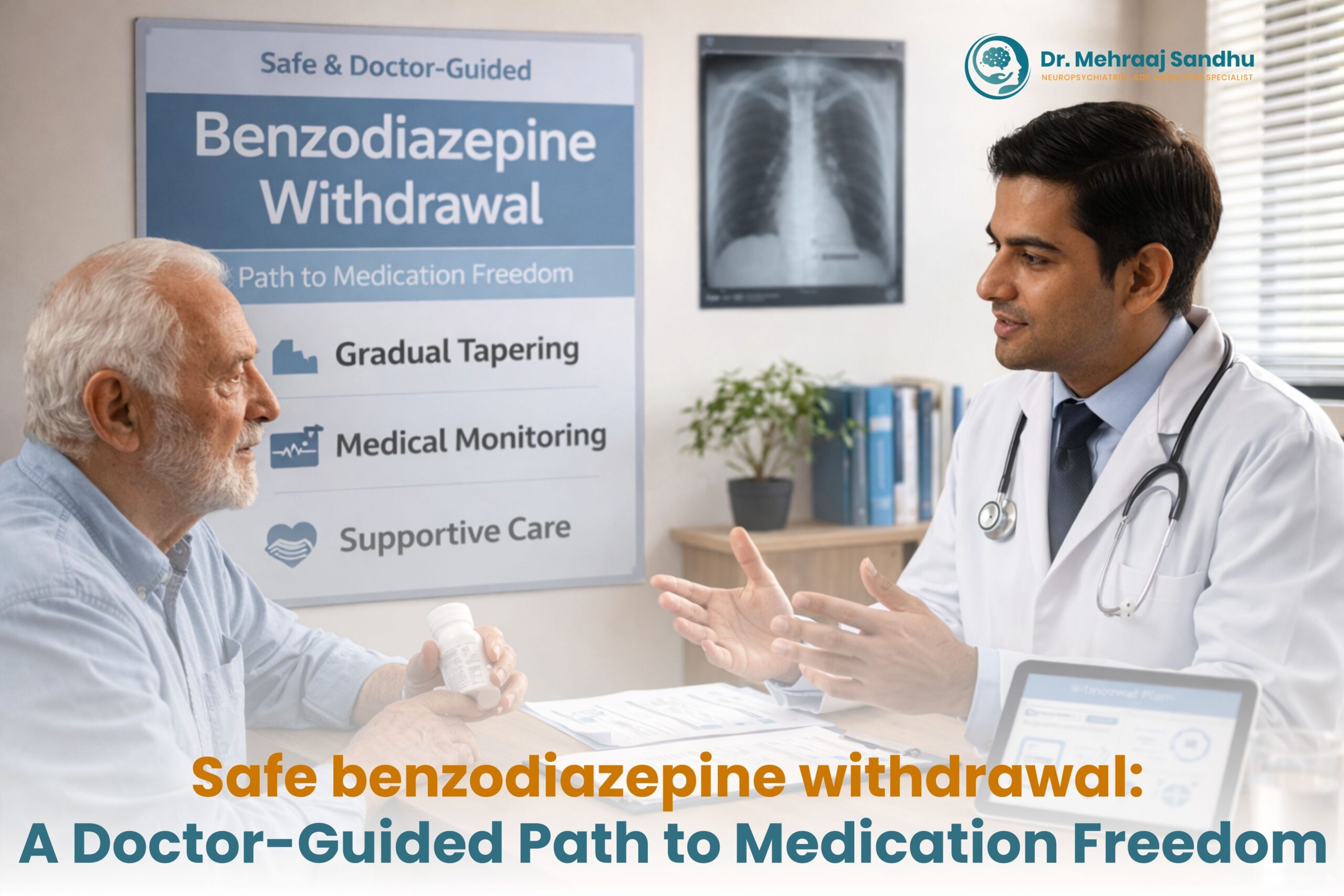
A lot of people start taking anxiety or sleep medications in the hopes of getting better quickly. But they might not be able to stop after a few months or years. This is often called “iatrogenic dependence,” which means dependence that develops after medications were given for real medical reasons.
A common example involves long-term use of benzodiazepines, pregabalin or sleeping pills. Patients often feel trapped because stopping suddenly can cause uncomfortable or even dangerous symptoms. That is why Safe benzodiazepine withdrawal must always be approached carefully and under medical supervision.
Patients often go to Dr. Mehraaj Sandhu’s clinic for help when they realize they want to take charge of their health again and rely less on sedative drugs. Recovery is possible without extra pain through structured tapering protocols and supportive care.
This article explains why medication dependence develops, how doctors manage withdrawal safely and what steps patients can take toward recovery.
Understanding Safe benzodiazepine withdrawal
Benzodiazepines are medications commonly prescribed for anxiety, panic attacks and insomnia. While effective in the short term, long-term use can lead to physical dependence.
When the brain becomes used to these medications, stopping them suddenly can cause withdrawal symptoms such as:
- Anxiety and restlessness
- Insomnia
- Tremors
- Irritability
- Increased heart rate
- In severe cases, seizures
Due to these risks, safe benzodiazepine withdrawal always means slowly cutting back instead of stopping all at once.
With the help of a doctor, patients can slowly lower their doses so that their brains can adjust naturally. This process is good for both your mental and physical health.
Psychiatrists like Dr. Mehraaj Sandhu make plans for their patients that balance safety and comfort during the withdrawal process.
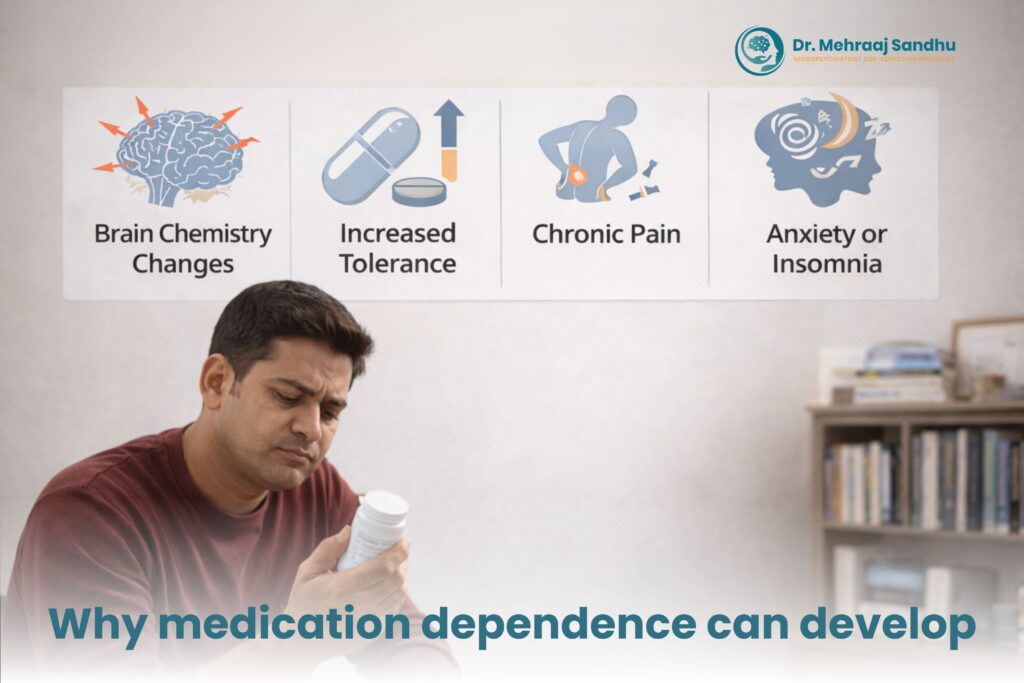
Why medication dependence can develop
Prescription medicines and unintended dependence
Many individuals never expected to struggle with medication dependence. Most began treatment during stressful periods such as:
- Severe anxiety episodes
- Sleep disorders
- Chronic stress
- Panic attacks
At first, the drugs worked well. But over time, tolerance can build up. This means that the body needs the drug to work normally.
In this case, treatment for benzodiazepine dependence may be needed.
Dependence does not mean a person has done anything wrong. It simply reflects the brain’s natural adaptation to medication exposure.
Iatrogenic dependence explained
Iatrogenic dependence refers to dependence caused unintentionally through medical treatment. It can happen when medications originally prescribed for short periods continue for months or years.
Patients often say things like:
- “I started taking this during a stressful time.”
- “My prescription kept getting renewed.”
- “Now I can’t sleep without it.”
Recognizing this pattern is the first step toward recovery and planning Safe benzodiazepine withdrawal.
Medications that commonly lead to dependence
Benzodiazepines
Alprazolam, clonazepam, and diazepam are some examples. These drugs relax the nervous system, but if you take them for a long time, you may become physically dependent on them.
Many people who want to know how to safely stop taking benzodiazepines are surprised to find out that slowly tapering off works better than stopping all at once.
Sleeping medications
Sedative hypnotics are often prescribed for insomnia. Over time they may lead to tolerance and dependence.
In such cases, doctors may recommend Sleeping pill dependence treatment combined with behavioral sleep strategies.
Pregabalin and similar medications
Doctors sometimes give pregabalin to people who are anxious or have nerve pain. Some people may find it hard to stop taking it after a long time.
As part of a larger review of medications, doctors may suggest Pregabalin dependence treatment.
These drugs change the brain’s calming pathways, which is why it can be hard to stop taking them suddenly.
Principles of Safe benzodiazepine withdrawal
Gradual dose reduction
The most important principle is slow tapering.
Instead of stopping immediately, doctors reduce the dose gradually over weeks or months. This allows the nervous system to adjust step by step.
This approach forms the core of Deprescribing benzodiazepines in modern psychiatric practice.
Typical tapering strategies may involve:
- Reducing doses by small percentages
- Adjusting the schedule based on symptoms
- Monitoring sleep and anxiety changes
Each taper plan is personalized.
Medical supervision
A qualified professional should always be there to help with withdrawal.
Patients at Dr. Mehraaj Sandhu’s psychiatric practice are closely watched during the taper process. This helps avoid problems and keeps you comfortable the whole time.
Medical supervision also lets you make changes when symptoms show up.
Addressing underlying conditions
Many patients originally started medication for anxiety or sleep problems.
Successful Safe benzodiazepine withdrawal also involves treating those underlying issues through safer alternatives, such as:
- Cognitive behavioral therapy
- Lifestyle changes
- Stress management techniques
- Non-addictive medications when appropriate
This holistic strategy improves long-term recovery.
Structured tapering protocols
Why structured plans work best
If you randomly cut your doses, you might get symptoms that you can’t predict. Structured tapering protocols offer a methodical approach to safely decrease medication.
These protocols are all about managing the withdrawal from medication and making sure that patients stay stable at every stage.
Typical tapering phases
A doctor-guided taper usually includes several phases:
1. Assessment
The physician reviews:
- Current medications
- Dosage history
- Duration of use
- Physical and mental health factors
2. Stabilization
Patients may first stabilize on a consistent dose before reductions begin.
3. Gradual taper
Small reductions occur every few weeks depending on individual tolerance.
4. Monitoring
Doctors track sleep, mood, and physical symptoms throughout the process.
Individualized timelines
Some patients complete withdrawal in a few months, while others require longer taper schedules.
The goal is not speed — the goal is safety.
That is why Safe benzodiazepine withdrawal focuses on sustainable progress rather than rushing the process.
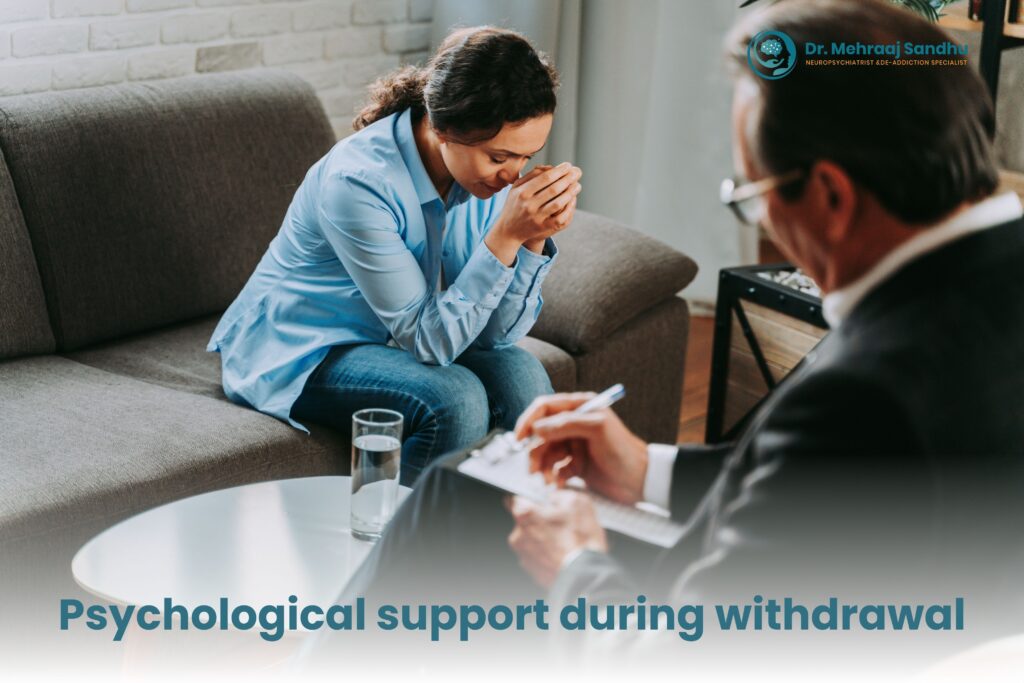
Psychological support during withdrawal
Managing anxiety without sedatives
Many people worry that anxiety will return when they stop medications. In reality, supportive therapies can help manage symptoms effectively.
Strategies include:
- Cognitive behavioral therapy
- Breathing exercises
- Mindfulness training
- Regular physical activity
These approaches strengthen the brain’s natural calming systems.
Improving sleep naturally
Patients undergoing Sleeping pill dependence treatment often benefit from sleep hygiene strategies such as:
- Maintaining consistent sleep schedules
- Reducing caffeine intake
- Limiting screen exposure at night
- Creating a calm bedtime routine
These methods restore healthy sleep patterns without long-term medication reliance.
The role of a psychiatrist in medication tapering
Stopping long-term sedatives requires medical expertise.
A trained psychiatrist can:
- Identify safe taper schedules
- Manage withdrawal symptoms
- Treat underlying anxiety or insomnia
- Monitor mental health during recovery
Dr. Mehraaj Sandhu, psychiatrist, specializes in helping patients regain independence from medications through structured and compassionate care.
Patients often report that professional guidance makes the process far less stressful.
With proper support, Safe benzodiazepine withdrawal becomes achievable.
Benefits of deprescribing sedative medications
Reducing or stopping long-term sedatives can lead to meaningful health improvements.
Patients often experience:
- Improved cognitive clarity
- Better natural sleep
- Increased energy
- Reduced medication side effects
- Greater emotional stability
Many people also report feeling more confident and in control of their health after completing Safe benzodiazepine withdrawal.
Frequently Asked Questions (FAQs)
Q1. How long does Safe benzodiazepine withdrawal take?
The timeline varies depending on dosage, duration of use, and individual health. Some patients taper over several months, while others may need longer schedules to ensure safety.
Q2. Can I stop benzodiazepines suddenly?
Abrupt discontinuation is not recommended. Sudden stopping can cause serious withdrawal symptoms. Medical supervision is essential.
Q3. What symptoms can occur during withdrawal?
Common symptoms include anxiety, sleep disturbances, irritability and restlessness. With structured tapering, these symptoms are usually manageable.
Q4. Is professional help necessary for tapering medications?
Yes. A trained psychiatrist can design safe tapering schedules and provide support throughout the withdrawal process.
Q5. Can therapy help during medication tapering?
Absolutely. Psychological therapies can reduce anxiety and improve coping skills while medications are gradually reduced.
Q6. Will my anxiety return after stopping medication?
Not necessarily. Many patients manage anxiety successfully through therapy, lifestyle adjustments, and supportive care.
Conclusion
Long-term use of sedative medications can sometimes lead to dependence, even when prescriptions were written with good intentions. The good news is that you can get better.
Safe benzodiazepine withdrawal helps patients take back control of their health and well-being by slowly tapering off the drug, getting psychological support and getting expert advice.
If you feel stuck on medications that were prescribed to you years ago, getting professional help can be the thing that changes everything. Dr. Mehraaj Sandhu, a psychiatrist, helps many of his patients move toward safer, medication-free living.
